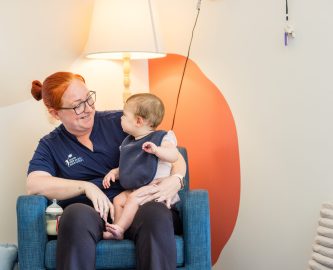
At North Star Early Education, we believe children learn best when they are engaged, curious and having fun. While play may seem simple on the surface, research continues to show that it is one of the most important ways young children develop the skills they need for life.
A recent TED-Ed talk, How Play Helps a Kid’s Brain Grow by early childhood educator Jesse Ilhardt, explores the remarkable role play has in shaping children’s developing brains. The talk highlights a message that resonates strongly with our approach at North Star: some of the most important learning happens when children are free to explore, imagine, create and interact with the world around them.
According to Ilhardt, play acts as a powerful driver of brain development. Through play, children build neural connections that support language, problem solving, creativity, emotional regulation and social skills. These foundations are critical for future learning and wellbeing, and they develop naturally through meaningful play experiences.
One of the key messages from the TED Talk is that play is not simply a break from learning. For young children, play is learning.
Whether children are building a tower, creating a pretend restaurant, exploring nature outdoors or collaborating with friends on a shared project, they are developing important skills that extend far beyond the activity itself. They are learning how to communicate, negotiate, persevere through challenges, think critically and express their ideas.
The talk also highlights the important role adults play in supporting children’s development. Meaningful interactions with educators, parents and caregivers help extend learning opportunities and encourage children to think more deeply about their experiences.
This aligns closely with the FinlandWay approach implemented across our North Star centres. Inspired by the world renowned Finnish education system, FinlandWay places curiosity, creativity, wellbeing and play at the heart of early learning. Rather than focusing solely on academic outcomes, it recognises that children learn best when they are actively engaged in experiences that are meaningful to them.
Play also helps children develop skills that cannot be taught through worksheets or screens alone. During play, children practise empathy, build confidence, strengthen friendships and learn how to navigate the world around them. These experiences help create resilient, capable learners who are well prepared for school and beyond.
For parents, it is reassuring to know that some of the most valuable learning moments often look very different from traditional education. A cardboard box can become a spaceship. A collection of sticks can become a construction project. A game of make believe can become an opportunity to build language, creativity and confidence.
At North Star Early Education, we see the power of play every day. It is why our environments are thoughtfully designed to inspire exploration, why our educators encourage children’s ideas and why play remains at the centre of our educational philosophy.
Sometimes the most important learning does not look like learning at all. It looks like play.
This article was inspired by the TED-Ed talk “How Play Helps a Kid’s Brain Grow” by Jesse Ilhardt. You can watch the original TED-Ed presentation on the TED website.